
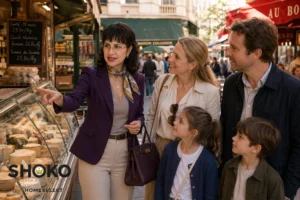
The Best Paris Markets and Local Shopping for Expats
There is a moment in almost every expat’s first year in Paris when the city stops feeling like a tourist destination and starts feeling like home, and more often than not, that moment happens at a market. Not a museum, not a monument, but a stall selling cheese, or a fishmonger who remembers your order, or the rhythm of a neighbourhood square filling with stalls twice a week.
Markets are where Paris actually teaches you how to live in it. They are also, practically speaking, where you will do a meaningful share of your weekly shopping once you settle in, so knowing which ones suit your neighbourhood and your habits is worth far more than another guidebook walking tour.
Marché Bastille and the Rhythm of a Real Parisian Saturday
The Marché Bastille, held on Thursday and Sunday mornings along the boulevard Richard-Lenoir, is one of the largest and most reliably excellent markets in the city, and it is exactly the kind of place where daily life in Paris really starts to feel less foreign. The stalls stretch for several blocks, and the crowd is a genuine cross-section of the neighbourhood rather than a tourist draw.
Expats who live nearby tend to build their entire week around this market, arriving early to beat the crowds, building a relationship with two or three vendors, and treating Sunday lunch as the natural extension of a morning spent there. For a newly arrived family, a single visit here often does more to demystify Parisian daily life than weeks of reading about it.
Marché d’Aligre — Bargains, Character, and a Steeper Learning Curve
The Marché d’Aligre in the 12th arrondissement rewards patience and a willingness to haggle gently, something that does not come naturally to most expats accustomed to fixed prices. It is also, for those who push through the initial discomfort, one of the best value markets in the city, with produce prices that can run noticeably lower than the more polished markets further west.
This market suits expats who want to genuinely integrate rather than simply observe, and who are comfortable with a slightly chaotic, unmistakably local atmosphere rather than the more curated feel of markets in wealthier arrondissements. It is rarely anyone’s first market in Paris, but it is often the one people grow to love most once they understand it.
Smaller Neighbourhood Markets Worth Knowing
Beyond the famous markets, nearly every arrondissement has a smaller covered or open-air market that locals rely on far more than tourists ever discover. The Marché des Enfants Rouges in the Marais, though touristy at lunch, becomes a genuine neighbourhood resource once the food stalls close and the produce vendors take over. The covered Marché Saint-Quentin near Gare du Nord offers a similar dynamic with a more practical, everyday character.
For expat families, these smaller markets are often more useful than the famous ones, simply because they sit closer to home and operate on a schedule that fits around school pickups and weekday routines rather than weekend tourism. Choosing where to live with one of these markets in walking distance is something we increasingly discuss with relocating families during the search itself, since it shapes daily life as much as the apartment does.
When the Supermarket Still Makes Sense
Markets are wonderful, but they are not always practical, particularly for an expat still adjusting to a new language, a new currency, and a new sense of how much things should cost. French supermarkets, from the everyday Monoprix to the more budget-friendly Carrefour and Franprix, remain essential for the staples that markets do not reliably cover, from cleaning products to late-evening top-up shopping.
Most settled expats end up running a hybrid system: market shopping for produce, cheese, and fish a few times a week, supermarket runs for everything else. Understanding how to set up a French bank account as a non-resident early on also makes this transition smoother, since contactless payment habits and local loyalty programmes at French supermarkets work more easily with a domestic account than with a foreign card.
Why This Connects Back to How You Financed Your Move
It might seem like a stretch to connect grocery shopping to mortgage financing, but the two are more linked than they first appear. Expats who arrive having already worked out what they need to know before they search for property in France tend to settle into a realistic monthly budget far faster than those who are still untangling financing surprises months after moving in.
A property search that accounts honestly for ongoing costs, from the charges de copropriété to the everyday reality of market versus supermarket spending, produces a far more sustainable relocation than one focused purely on the purchase price. The families who adjust most smoothly to Paris life are consistently the ones who treated the financial planning and the lifestyle planning as a single decision rather than two separate ones.
The First Few Weeks Set the Pattern
There is a temptation, in the chaos of a first month abroad, to simply default to whichever supermarket sits closest to a temporary rental and never venture beyond it. This is understandable, and entirely forgivable, but it also tends to produce expats who feel like Paris remained at arm’s length for far longer than necessary.
Carving out two or three Saturday mornings during that first month specifically to explore markets near the apartment, even before the move is fully settled, pays off disproportionately. It is a small, low-stakes way of practising the language, learning the neighbourhood’s actual rhythm, and starting to feel less like a visitor and more like someone who lives here, long before the paperwork is fully resolved.
Building Your Own Routine, Not Someone Else’s
The mistake many newly arrived expats make is trying to adopt the market routine of a friend or a guidebook recommendation rather than building one suited to where they actually live and how they actually cook. The best market for a family in the 16th with school-age children looks nothing like the best market for a young professional in the 11th, and treating either as the universal answer leads to wasted Saturday mornings.
The honest advice, six months into living here ourselves, is to try two or three markets near your actual apartment during your first month, pay attention to which one you find yourself returning to without thinking about it, and let that become your routine. Paris rewards the people who build a genuine local life rather than perform one, and markets are one of the easiest, most enjoyable places to start.
If you are relocating to Paris and want guidance on which neighbourhoods put the right markets and daily conveniences within easy reach, Contact SHOKO and we will factor this into your search from the start.
Recommended Reads
The Best International Schools in Paris for Expat Families — homefrance.eu
The Practical Expat Guide to Daily Life in Paris — homefrance.eu
Where to Live in France — buypropertyfrance.com
The Most Undervalued Arrondissements in Paris Right Now — gtamarket.ca